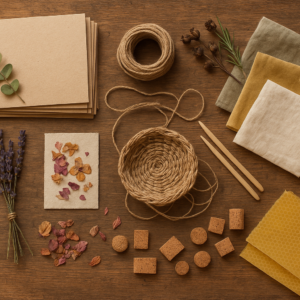
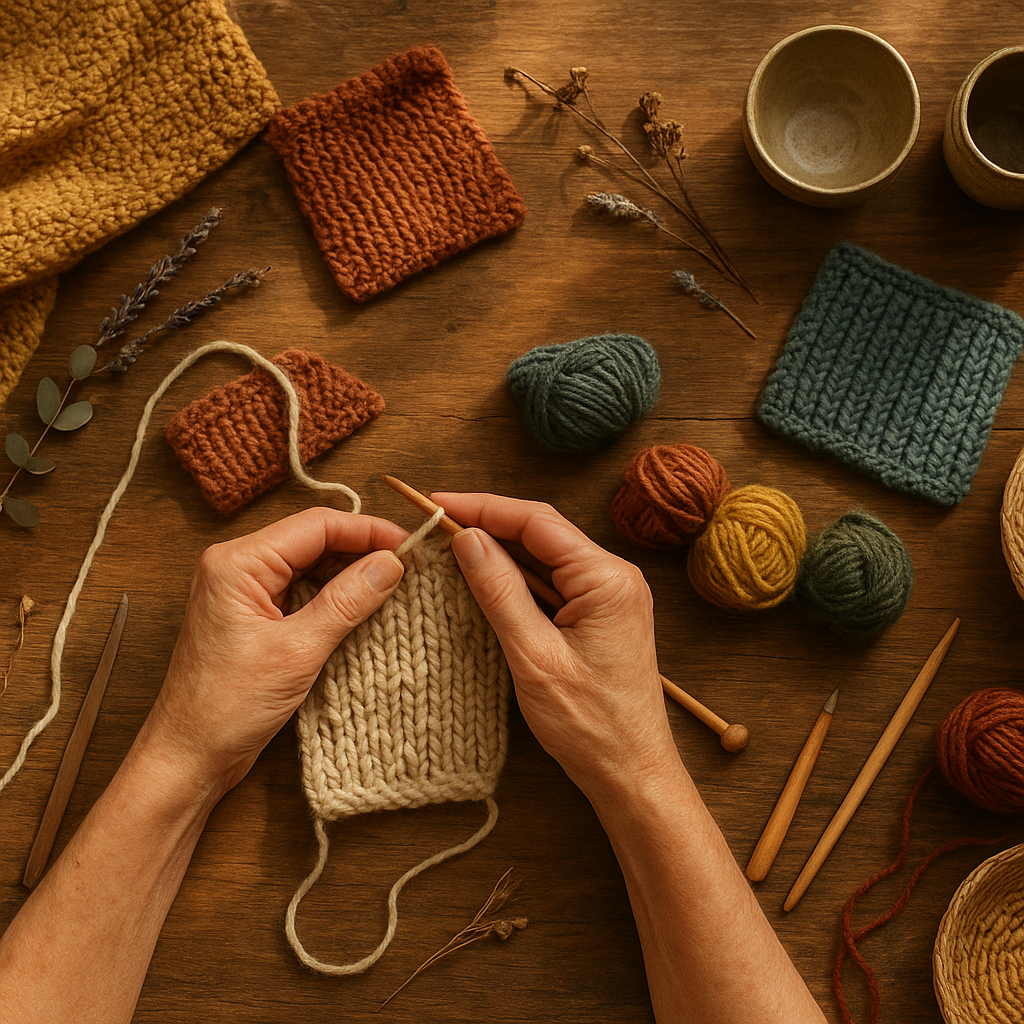
Something unexpected has been happening in living rooms, community centers, and online marketplaces over the past decade. While smartphones get smarter and artificial intelligence reshapes entire industries, people are turning — in growing numbers — to ancient skills: weaving baskets, throwing clay, stitching embroidery, carving wood. Traditional handcrafts, far from fading into irrelevance, are experiencing a genuine and sustained revival that shows no signs of slowing down.
This isn’t nostalgia for its own sake. The resurgence of traditional crafts in modern society reflects something deeper — a collective hunger for meaning, tactile experience, and connection in a world that increasingly rewards speed over substance. Understanding why this revival is happening, and what it means for culture and creativity, reveals a fascinating intersection between heritage and contemporary life.
The Numbers Behind the Craft Revival
The growth of handcraft culture isn’t just anecdotal. The global handicrafts market was valued at approximately $680 billion in 2022 and is projected to reach over $1.2 trillion by 2032, according to industry research. Etsy, one of the largest online platforms for handmade goods, reported over 96 million active buyers in 2022, a figure that nearly doubled from pre-pandemic levels.
Closer to home, enrollment in craft classes — from pottery and weaving to bookbinding and leatherwork — surged dramatically during and after the COVID-19 pandemic. Organizations like the American Craft Council have documented a measurable uptick in both participation and public interest in handmade traditions. Communities that once struggled to keep traditional craft guilds alive are now managing waiting lists.
These numbers point to a cultural shift that’s structural, not temporary. People aren’t just buying handmade goods as a trend; they’re learning how to make them.
What’s Driving People Back to Handmade Traditions?
The Search for Meaning in Making
Modern life is heavily screen-based. Many people spend their working hours producing outputs that are invisible — emails, code, spreadsheets, presentations. There’s no physical artifact to hold at the end of the day. Handcrafts offer a powerful antidote to that abstraction. When you throw a bowl on a pottery wheel or finish a hand-knitted sweater, the result is undeniably real. You can touch it, use it, give it away.
Psychologists have coined the term “the IKEA effect” to describe how people place higher value on things they’ve made themselves. But handcraft goes further than flat-pack furniture assembly — it builds genuine skill over time, creating a deep sense of accomplishment that’s difficult to replicate in digital environments.
Mental Health and the Mindfulness Connection
There’s a growing body of research linking craft activities with improved mental health outcomes. Repetitive, focused handwork — knitting, weaving, carving — activates a state similar to meditation. The rhythm and concentration required can lower cortisol levels, reduce anxiety, and improve mood.
Occupational therapists have long used craft activities therapeutically, but now mainstream wellness culture has caught up. Craft is increasingly framed not as a hobby, but as a form of self-care — one that produces something tangible in the process. For many practitioners, sitting down to embroider or throw clay isn’t merely a pastime; it’s a deliberate mental health practice.
Sustainability and the Slow Living Movement
Growing environmental awareness has fueled interest in handmade goods as an alternative to fast fashion and mass production. A hand-stitched leather bag or a hand-thrown ceramic mug carries a radically different environmental footprint than factory-produced equivalents. More importantly, items made with care tend to be kept and valued rather than discarded.
The slow living movement — which emphasizes intentional consumption, quality over quantity, and connection to the origins of objects — dovetails naturally with traditional craft values. When you know how something is made, you develop a different relationship with it. That awareness changes buying habits and, for many people, sparks a desire to learn how to make things themselves.
How Traditional Crafts Are Making a Comeback in the Digital Age
It might seem paradoxical that the internet — often blamed for fragmenting attention and homogenizing culture — has become one of the most powerful tools for preserving and spreading traditional craft knowledge. Yet the digital age has proven to be a remarkable accelerant for the handcraft revival.

YouTube, TikTok, and the Democratization of Craft Knowledge
Traditional crafts were historically transmitted through apprenticeships and family lineages. That model worked for centuries, but it was inherently limited by geography and access. Today, a teenager in Ohio can watch a Japanese master demonstrate traditional shibori dyeing techniques on YouTube. A retired teacher in rural Scotland can follow along with a West African drum-making tutorial on TikTok.
Craft content performs remarkably well on social media. Satisfying process videos — hands working clay, needles moving through fabric, a knife revealing grain in a block of wood — attract enormous audiences. The hashtag #crochet alone has generated billions of views on TikTok, introducing younger generations to a craft their grandmothers practiced. This digital visibility has turned obscure traditional techniques into global phenomena.
Online Marketplaces and the Economics of Handmade
For generations, the biggest challenge facing traditional craft practitioners was economic. Handmade goods are labor-intensive, and competing with mass-produced alternatives on price is nearly impossible. Online marketplaces have shifted this dynamic by connecting makers directly with buyers who actively seek out and value handmade work.
Platforms like Etsy, Not on the High Street, and even Instagram have created viable economic pathways for craft practitioners that simply didn’t exist twenty years ago. A weaver in rural Appalachia or a ceramicist in rural Ireland can now reach a global customer base. This economic sustainability is crucial — crafts that can support their practitioners have a much better chance of surviving and evolving.
The Role of Traditional Crafts in Preserving Cultural Heritage
Beyond individual wellbeing and economic opportunity, traditional handcrafts carry something irreplaceable: encoded cultural knowledge. Every weaving pattern, every ceramic form, every embroidery motif tells a story about the people and places that created it. When these techniques disappear, something genuinely irretrievable is lost.
UNESCO has recognized this through its Intangible Cultural Heritage program, which lists traditional craft practices alongside oral traditions and ritual performances as forms of living heritage requiring active protection. Countries from Japan to Morocco have established formal programs to recognize and support master craft practitioners, ensuring their knowledge can be transmitted to new generations.
Which Movement Reframed Craft in the Modern Era?
To understand today’s revival, it helps to look back at its historical roots. The Arts and Crafts Movement, which emerged in Britain in the latter half of the 19th century, was arguably the first major effort to reframe traditional craft as culturally and artistically significant in the face of industrialization. Thinkers like John Ruskin and William Morris argued passionately that handmade objects possessed a moral and aesthetic quality that machine production could never replicate.
The movement spread to the United States, Scandinavia, and beyond, influencing architecture, furniture design, textiles, and decorative arts. It established a philosophical framework — that making things by hand connects humans to their materials, their labor, and each other — that continues to resonate in contemporary craft culture. Many of today’s craft advocates are, consciously or not, heirs to this tradition.
Indigenous and Community Craft Traditions
For many communities, traditional crafts are inseparable from identity and sovereignty. Indigenous weaving traditions, pottery techniques, and beadwork patterns are not merely aesthetic choices — they’re living archives of history, cosmology, and community relationships. The revival of these practices within Indigenous communities represents an act of cultural reclamation as much as artistic expression.
Across Latin America, Africa, and Southeast Asia, craft cooperatives have emerged as vehicles for both cultural preservation and economic empowerment, allowing communities to maintain traditional practices while building sustainable livelihoods. These cooperatives often blend ancient techniques with contemporary design sensibilities, creating work that is rooted in tradition while speaking to modern audiences.
What Is the Newest Craft Craze?
While all traditional crafts are seeing renewed interest, some have captured particular cultural momentum in recent years. Tufting — the process of pushing yarn through a backing fabric to create textural rugs and wall hangings — exploded on social media platforms around 2020 and has remained a major trend, appealing to younger makers drawn to its bold, graphic possibilities.

Natural dyeing has surged alongside growing interest in sustainability, with makers experimenting with plant-based pigments from avocado pits, madder root, and indigo. Lino printing has found a new generation of enthusiasts through social media communities. And ceramics — always beloved — continues to attract new practitioners at every skill level, fueled by the satisfying, meditative quality of working with clay.
Perhaps most notably, visible mending has transformed from a practical necessity into a creative and political statement. Boro stitching, sashiko embroidery, and decorative darning have become ways to repair and celebrate damaged clothing rather than discard it — a small but meaningful act of resistance against throwaway culture.
What Is the Future of Handicraft?
The future of traditional handicraft looks genuinely promising, though not without complexity. As demand grows, there’s a risk of commercialization diluting authentic practice — mass-produced items marketed as handmade, or traditional patterns stripped of their cultural context and applied indiscriminately. Thoughtful engagement with craft culture requires awareness of these tensions.
At the same time, the integration of traditional craft knowledge with contemporary design and technology is generating genuinely exciting new possibilities. Makers are combining centuries-old techniques with modern materials, digital tools for pattern design, and global networks for collaboration and exchange. This isn’t a betrayal of tradition — it’s how living traditions have always evolved.
Educational institutions are also taking notice. Schools and universities are increasingly incorporating craft and making into curricula, recognizing the cognitive, creative, and social benefits of hands-on skill development. Makerspaces and community craft studios are becoming civic infrastructure in cities that understand the value of creative community gathering places.
Getting Involved: Starting Your Own Craft Practice
For anyone curious about engaging with traditional handcrafts, the barriers to entry have never been lower. Here are some practical ways to begin:
- Start with a local class or workshop — Community colleges, craft studios, and local guilds often offer beginner sessions in everything from pottery to bookbinding. Learning in person provides immediate feedback and community connection that online tutorials can’t fully replicate.
- Explore free online resources — YouTube channels dedicated to specific crafts offer extraordinarily high-quality instruction at no cost. Start with a technique that genuinely interests you rather than one that simply seems practical.
- Invest in quality materials from the start — Cheap materials can be genuinely discouraging for beginners. Quality tools and materials make learning easier and more enjoyable.
- Join a community — Online forums, local guilds, and social media groups provide encouragement, troubleshooting help, and creative inspiration. Craft communities tend to be remarkably generous with knowledge.
- Embrace the learning curve — Traditional crafts reward patience and persistence. The imperfections in early work are part of the process, not evidence of failure.
- Explore cultural context — Learning about the history and cultural significance of a craft deepens the experience significantly. Understanding where a technique comes from adds layers of meaning to the practice.
Conclusion
The revival of traditional handcrafts in modern society is neither accidental nor fleeting. It reflects genuine human needs — for meaningful work, tactile experience, mental restoration, cultural connection, and sustainable alternatives to mass consumption. Driven by social media, online marketplaces, the wellness movement, and growing environmental awareness, handcraft has moved from the margins of contemporary culture toward its center.
The Arts and Crafts Movement of the 19th century warned that something essential was being lost to industrialization. Today’s makers are making a similar argument — not by rejecting modernity, but by reclaiming the irreplaceable value of things made slowly, carefully, and by hand. Whether someone is learning to throw clay for the first time or a master weaver is passing down ancestral patterns to a new generation, the act of making connects people to each other and to something larger than themselves.
Traditional handcrafts are thriving because they offer something no algorithm can replicate: the deeply human satisfaction of making something real.