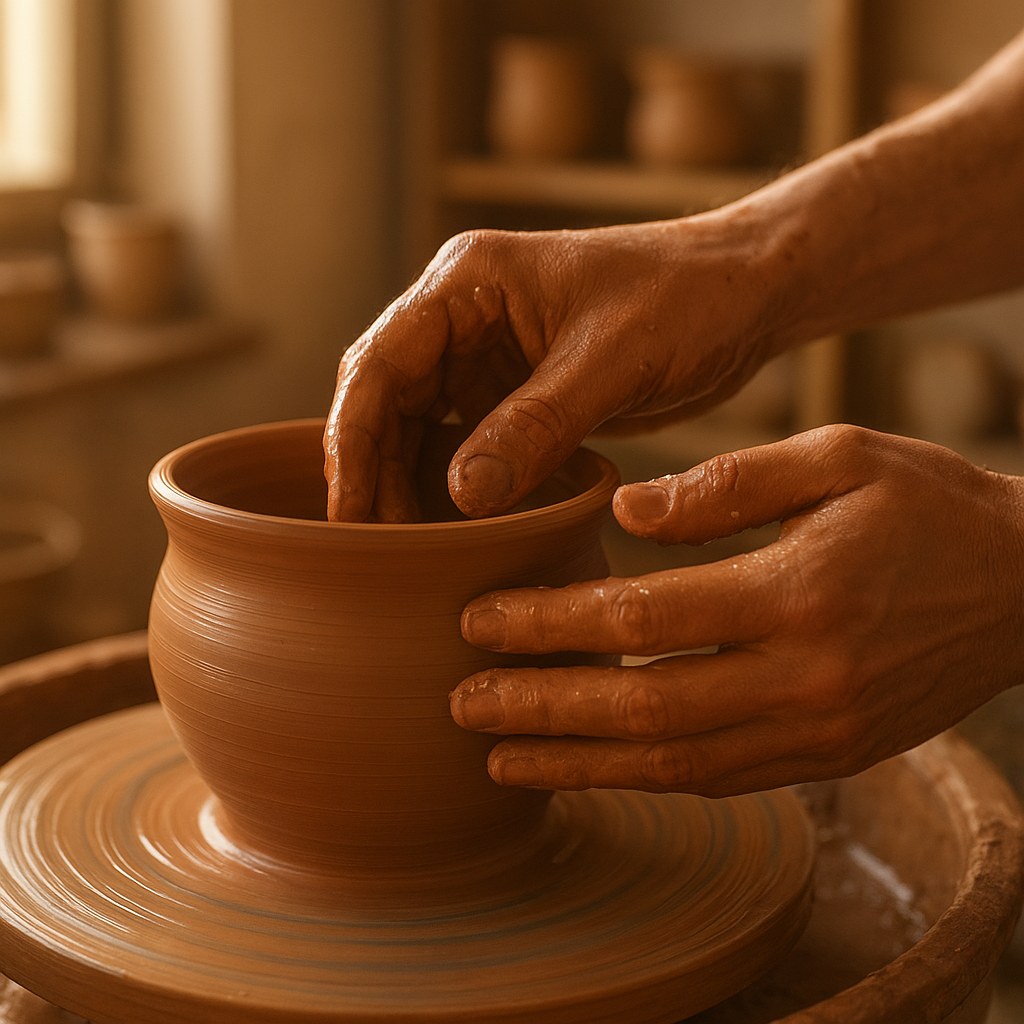
There’s something almost magical about sinking your hands into a cool lump of clay for the first time. The world goes quiet. Your phone, your to-do list, that awkward conversation from Tuesday — it all fades into the background. What remains is just you, your breath, and this ancient, shape-shifting material responding to every touch.
Pottery isn’t just an art form. Increasingly, therapists, neuroscientists, and everyday people are recognizing what potters have known for thousands of years: working with clay heals. From easing anxiety and depression to rebuilding fine motor skills after injury, the therapeutic benefits of clay work touch nearly every dimension of human wellbeing.
In this article, we’ll explore the science, psychology, and even the spiritual symbolism behind why clay is such a powerful medium for healing mind and body — plus practical ways to experience these benefits yourself.
The Science Behind Why Clay Calms the Brain
If you’ve ever felt your shoulders drop and your mind settle while kneading dough, gardening, or molding clay, you’ve experienced something neuroscientists are actively studying. The connection between our hands and our brains runs far deeper than most people realize.
Hands as a Gateway to the Nervous System
According to research popularized by Dr. Kelly Lambert, a neuroscientist at the University of Richmond, hands-on activities like pottery activate what she calls “effort-driven rewards” — a brain circuit linking physical effort with emotional payoff. When our hands are engaged in meaningful, repetitive work, the brain releases a cascade of feel-good neurochemicals, including:
- Serotonin — the mood-stabilizing hormone linked to feelings of wellbeing and contentment
- Dopamine — associated with motivation, pleasure, and the satisfaction of completing tasks
- Oxytocin — sometimes called the “bonding hormone,” released during tactile, nurturing activities
Lambert’s research suggests that our modern, screen-dominated lives have deprived us of these natural neurochemical rewards. Working with clay essentially reactivates an ancient pathway that our ancestors used daily — and our brains thank us for it.
Clay Work as Embodied Cognition
Researchers at Drexel University have explored how working with malleable materials like clay promotes physical, cognitive, and emotional integration — a concept known as embodied cognition. The idea is simple but profound: we don’t just think with our brains. We think through our bodies.
When you press, pinch, coil, or smooth clay, you’re literally externalizing your internal state. Anxious energy becomes texture. Frustration becomes pressure. Calm becomes symmetry. This process gives form to feelings that might otherwise remain stuck and unprocessed — which is precisely why art therapists have used clay in clinical settings for decades.
7 Therapeutic Benefits of Pottery for Mental Health
While the science is compelling, the real magic happens in the lived experience. Here are the most well-documented mental health benefits of working with clay, supported by both research and the lived experience of countless potters.
1. It Pulls You Into a Flow State
Psychologist Mihaly Csikszentmihalyi described “flow” as a state of complete absorption in an activity — where time distorts, self-consciousness vanishes, and the task itself becomes the reward. Pottery is a near-perfect flow activity because it offers:
- Immediate feedback (the clay responds instantly to your touch)
- A balance of challenge and skill
- Clear, achievable goals in each session
In a world of constant distraction, entering flow regularly is one of the most protective things you can do for your mental health.
2. It Reduces Anxiety Through Sensory Grounding
Anxiety lives in the future — in the “what ifs” and worst-case scenarios. Clay work anchors you firmly in the present through rich sensory input: the cool temperature, the earthy smell, the yielding texture, the rhythmic motion of the wheel. This is essentially a form of mindfulness practice, but one that feels effortless rather than forced.
Many people who struggle with traditional seated meditation find that clay offers a “back door” into mindfulness. Your hands are busy, so your mind doesn’t need to fight so hard to be still.
3. It Provides a Healthy Outlet for Emotions
Anger, grief, frustration — these emotions carry physical energy that needs somewhere to go. Wedging clay (the process of kneading it to remove air bubbles) is a remarkably effective way to discharge that energy. Unlike destructive outlets, the energy you pour into clay is transformed into something creative rather than harmful.
4. It Builds Self-Esteem Through Mastery
There’s a unique confidence that comes from creating something with your own hands — something that didn’t exist before you made it. This is especially powerful for people struggling with depression or low self-worth. Each finished piece is tangible proof of capability: I made this. I can make things happen.
5. It Encourages Acceptance of Imperfection
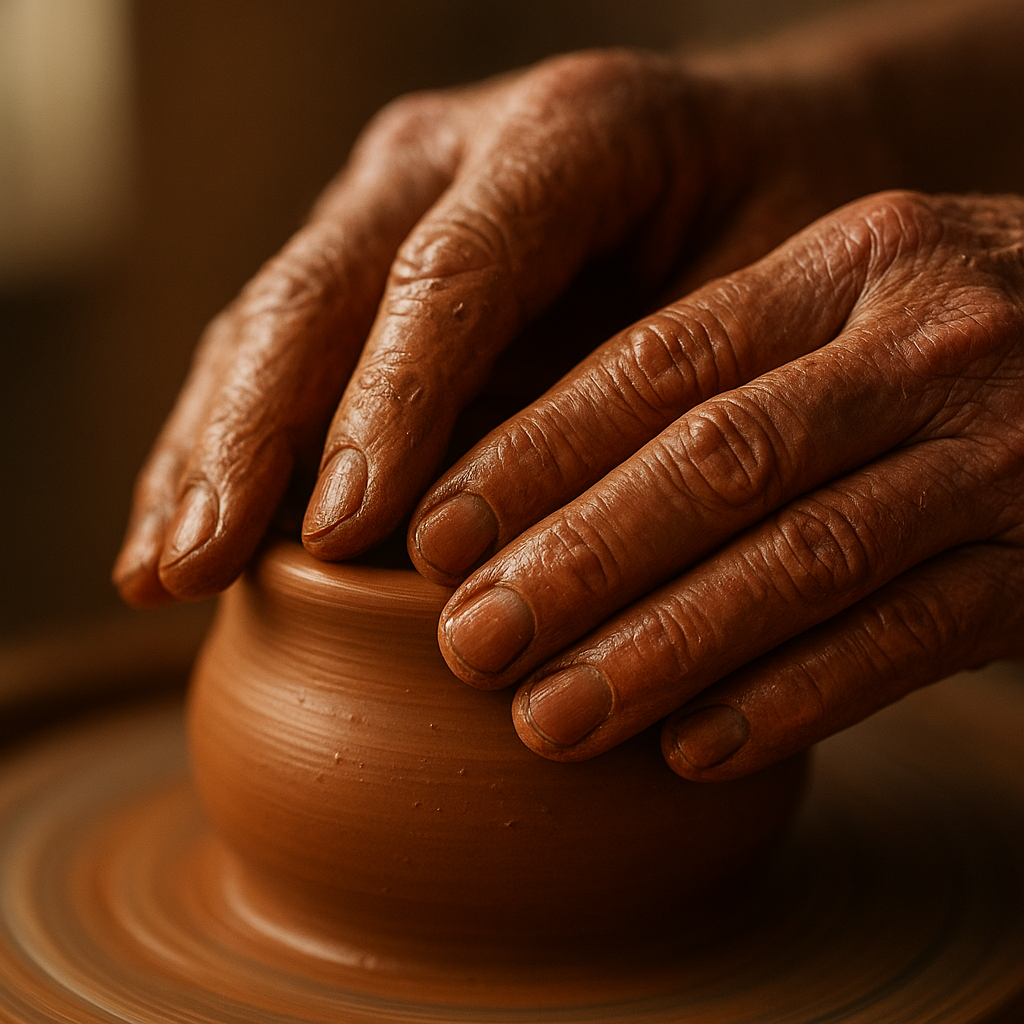
Clay is humbling. Pieces collapse. Glazes surprise you. Kilns have their own agendas. Experienced potters develop a philosophical relationship with imperfection — what the Japanese call wabi-sabi, the beauty found in irregularity and impermanence. Learning to love a slightly wonky bowl can, over time, teach you to be gentler with your own imperfections.
6. It Fosters Social Connection
While pottery can be a solitary practice, studio classes create natural opportunities for community. The shared vulnerability of being a beginner, the informal conversations that happen while hands are busy, the mutual celebration of small victories — these low-pressure social interactions can be especially valuable for people dealing with social anxiety or isolation.
7. It Offers a Screen-Free Mental Reset
The average American spends over 7 hours per day looking at screens. Clay work offers a genuine digital detox — not through willpower, but through engagement. When your hands are covered in slip, checking your phone simply isn’t an option. Many potters describe their studio time as the only hours in their week when they’re fully offline and fully present.
Physical Benefits: How Pottery Strengthens the Body
While the mental health benefits get most of the attention, pottery is also a surprisingly effective form of physical therapy and gentle exercise.
Fine Motor Skill Development and Rehabilitation
Occupational therapists frequently use clay work to help patients rebuild hand strength and dexterity after strokes, injuries, or surgeries. The resistance of clay provides natural strengthening for fingers, wrists, and forearms, while the variety of techniques — pinching, pulling, coiling, smoothing — works different muscle groups and joint movements.
For people with arthritis, the gentle, repetitive motions of hand-building can help maintain joint mobility. The warmth of freshly worked clay can also provide mild relief for stiff hands.
Core Strength and Posture
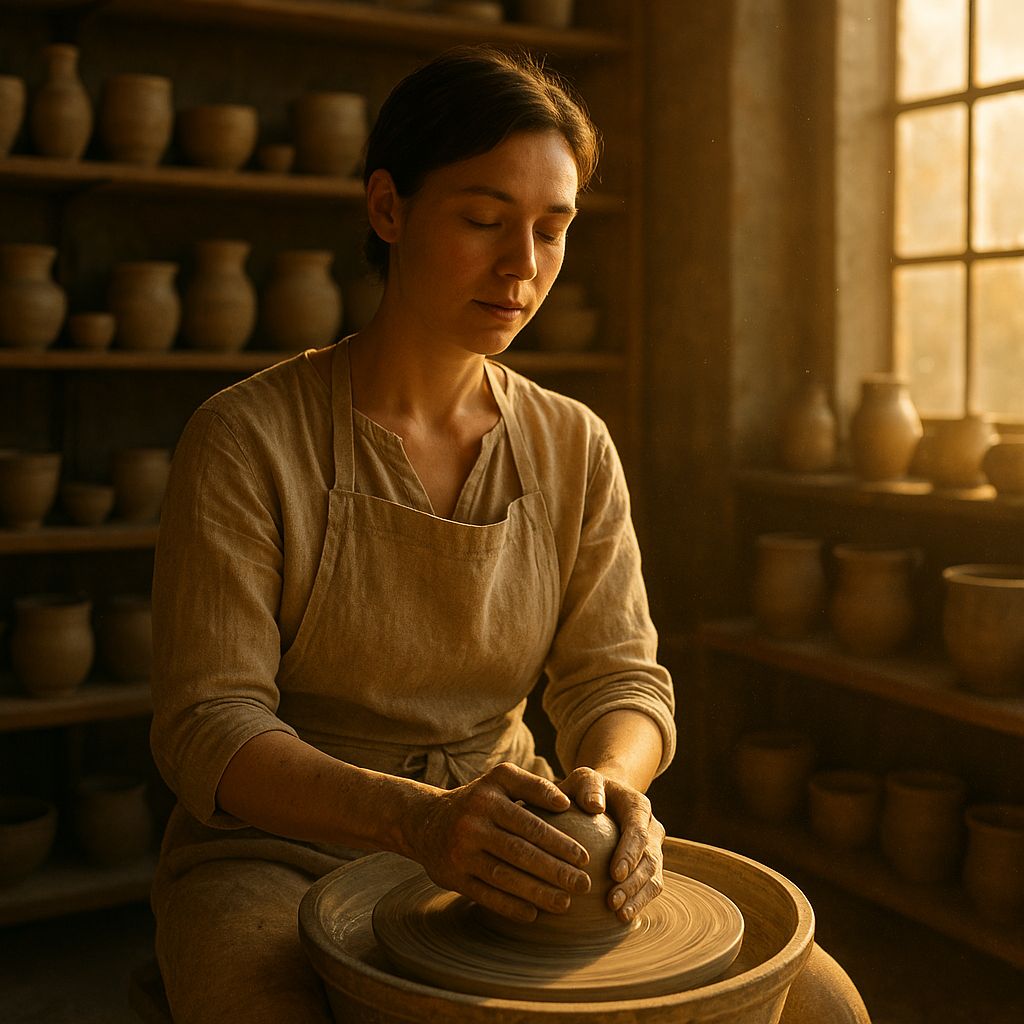
Wheel throwing, in particular, is a full-body experience. Proper centering technique requires engagement of your core, back, and shoulders. Experienced potters develop what could only be described as “potter’s posture” — a grounded, stable position that draws power from the body’s center rather than just the arms.
Hand-Eye Coordination
The precise, coordinated movements required to shape clay — especially on a spinning wheel — create ongoing training for hand-eye coordination. This benefit extends to other areas of life, from typing to playing musical instruments to everyday tasks that require manual dexterity.
The Spiritual and Symbolic Dimension of Clay
Part of clay’s healing power may come from something harder to quantify: its deep symbolic resonance across cultures and spiritual traditions.
The Biblical Significance of Clay
In the Judeo-Christian tradition, clay carries profound meaning. The book of Genesis describes God forming Adam from the dust of the ground — humanity itself shaped from earth. The prophet Isaiah writes, “We are the clay, you are the potter; we are all the work of your hand” (Isaiah 64:8), using the potter-clay relationship as a metaphor for the divine-human relationship.
This symbolism resonates on a psychological level too. The idea that we can be shaped, reshaped, and molded — that our current form is not our final form — is inherently hopeful. For many people, working with clay becomes a tangible meditation on transformation, surrender, and the beauty of being a work in progress.
Clay in Other Cultural and Spiritual Traditions
Clay’s spiritual significance extends far beyond the Bible. In many Indigenous traditions, clay is considered a living material with its own spirit. In Japanese culture, the tea ceremony elevates simple clay vessels to objects of profound contemplation. In Hindu tradition, clay idols are created and then ritually immersed in water, symbolizing the cycle of creation and dissolution.
Working with clay connects you to this ancient, cross-cultural lineage of meaning-making — whether or not you subscribe to any particular belief system.
Understanding Your Material: Types of Clay and Their Uses
If you’re considering trying pottery for its therapeutic benefits, understanding the basic types of clay can help you choose the right starting point.
What Are the Three Main Types of Clay Used in Pottery?
The three primary categories of pottery clay are:
- Earthenware — Fired at the lowest temperatures (around 1,000–1,150°C), earthenware is porous, easy to work with, and forgiving for beginners. It’s the clay used in terra cotta pots and many traditional folk ceramics. Its softness makes it ideal for hand-building therapeutic projects.
- Stoneware — Fired at higher temperatures (1,200–1,300°C), stoneware is durable, non-porous, and versatile. It’s the most common clay used in studio pottery classes. It has enough body for wheel throwing while remaining manageable for those still developing strength and technique.
- Porcelain — The most refined and challenging clay, porcelain is white, translucent when thin, and fired at the highest temperatures (1,200–1,450°C). It demands precision and patience, which makes it less ideal for beginners but deeply rewarding for experienced potters seeking a meditative challenge.
For therapeutic purposes, earthenware and stoneware are generally the best choices. They’re forgiving enough to allow emotional expression without excessive frustration, while still providing the sensory richness that makes clay work so beneficial.
Beyond Pottery: 10 Uses of Clay in Everyday Life
Clay’s versatility extends well beyond the pottery studio. Here are ten ways clay is used across industries and daily life:
- Pottery and ceramics — functional and decorative objects
- Construction — bricks, tiles, and roofing materials
- Skincare — bentonite and kaolin clay masks for detoxifying skin
- Medicine — kaolin is used in anti-diarrheal medications
- Water filtration — clay filters remove impurities from drinking water
- Paper production — kaolin clay gives paper its smooth, white surface
- Cat litter — bentonite clay’s absorbent properties
- Sculpture and art therapy — beyond functional pottery
- Soil amendment — improving garden soil structure
- Cultural and ceremonial objects — from Day of the Dead figurines to Native American pottery traditions
This breadth of use speaks to clay’s fundamental role in human civilization — and perhaps explains why working with it feels so instinctively right. Many of these everyday applications can even become sources of artistic inspiration when viewed through a creative lens.
How to Start Experiencing the Therapeutic Benefits of Clay
You don’t need to invest in a wheel or a kiln to begin. Here are accessible ways to bring clay into your life:
Start with Air-Dry Clay at Home
Air-dry clay requires no kiln and no special equipment. A basic kit costs under $20 and can be used at your kitchen table. Start with simple projects — pinch pots, small sculptures, textured tiles — and focus on the process rather than the product.
Try a Local Pottery Class
Community centers, art studios, and community colleges frequently offer beginner pottery classes. The social dimension adds another layer of therapeutic benefit, and having an instructor means you can focus on the experience without worrying about technique.
Create a Mindful Clay Practice
You don’t need to make anything at all. Simply sitting with a piece of clay — squeezing it, rolling it, pressing your fingers into it — can be a powerful grounding exercise. Some therapists recommend keeping a small ball of clay at your desk as a stress-relief tool.
Set an Intention
Before you begin working, take a moment to set an intention. It might be as simple as “I’m here to be present” or “I’m making space for whatever I’m feeling today.” This small ritual transforms clay work from a craft activity into a genuine self-care practice.
Conclusion: The Healing Is in the Making
The therapeutic benefits of working with clay aren’t a trend or a gimmick — they’re rooted in neuroscience, supported by clinical practice, and validated by thousands of years of human experience. Clay calms the anxious mind, strengthens the recovering body, builds confidence in the discouraged spirit, and connects us to something ancient and deeply human.
Whether you’re drawn to pottery for stress relief, physical rehabilitation, creative expression, or spiritual exploration, the material meets you where you are. It doesn’t demand perfection. It doesn’t judge your output. It simply responds to your touch, moment by moment, and invites you to be fully, wonderfully present.
In a world that often feels like it’s spinning too fast, maybe what we need most is to sit at a wheel that’s spinning just right — hands in clay, mind at rest, creating something from nothing.