
Art and technology have always shared a complicated, fascinating relationship. From the invention of the printing press to the rise of photography, every major technological leap has sent ripples through the creative world — sometimes unsettling it, often expanding it in ways nobody could have predicted. Today, that relationship is evolving faster than ever, and the results are genuinely thrilling for artists, makers, and curious observers alike.
Whether you’re a seasoned craftsperson experimenting with digital tools, a hobbyist who stumbled across generative art online, or simply someone trying to make sense of what’s happening at the crossroads of creativity and code, this is a fascinating moment to pay attention. The intersection of art and technology isn’t just a trend — it’s reshaping what art can be, who gets to make it, and how audiences experience it.
What Does the Intersection of Art and Technology Actually Mean?
It sounds like a buzzword, and honestly, it gets thrown around a lot. But at its core, the intersection of art and technology refers to the space where creative expression and technological innovation influence and inspire each other. This isn’t just about digital art or AI-generated images — it spans a much wider territory.
Think about how 3D printing has changed sculpture. How motion-capture technology has transformed animation and performance art. How social media algorithms have reshaped the way artists build audiences and distribute their work. Technology isn’t just a tool artists pick up — it’s actively changing the context in which art is made, shared, and understood.
Conversely, artists are influencing technology too. Designers shape user interfaces. Game artists define entire visual languages that millions of people navigate daily. Creative professionals push software companies to build better, more intuitive tools. The exchange runs in both directions, and that bidirectional push is what makes this intersection so dynamic.
A Brief Look at How We Got Here
It’s worth pausing on history for a moment, because the current moment doesn’t exist in a vacuum. Artists have been early adopters and skeptics of technology throughout history — often both at the same time.
From the Camera to the Computer
When photography emerged in the 19th century, many painters feared it would make their work obsolete. Instead, it liberated painting from the obligation of pure representation, helping to pave the way for impressionism, cubism, and abstraction. Photography didn’t kill painting — it changed what painting needed to do.
A similar disruption happened when computers became accessible in the latter half of the 20th century. Artists like Vera Molnár and Harold Cohen were experimenting with algorithmic art as early as the 1960s and 70s — long before most people had heard of personal computers. These pioneers recognized that code could be a creative medium, not just a business tool.
The Digital Revolution and What It Unlocked
The widespread availability of digital tools in the 1990s and 2000s democratized creative production in significant ways. Software like Photoshop, Illustrator, and later Blender gave individuals access to capabilities that had previously required entire studios or production teams. Suddenly, a person with a laptop and the right software could produce work that rivaled major commercial studios — at least technically.
This democratization has continued to accelerate. Today, artists and crafters have access to tools that would have seemed like science fiction two decades ago. The barrier to entry for experimenting with digital creativity has never been lower.
Key Areas Where Art and Technology Intersect Right Now
The current landscape is rich and varied. Here are some of the most significant areas where art and technology are actively colliding and collaborating.
Artificial Intelligence and Generative Art
Few topics in creative circles generate more debate than AI-generated imagery. Tools like Midjourney, Stable Diffusion, and DALL-E have made it possible for anyone to produce visually striking images using text prompts. The outputs can be genuinely beautiful — and deeply contentious.
The debate often centers on authorship, originality, and the value of human skill and labor. These are legitimate and important conversations. But it’s also worth noting that many artists are using AI not as a replacement for their practice but as an additional tool — feeding it their own work, using it to prototype ideas, or combining AI outputs with hand-drawn elements.
Generative art itself has a long history predating modern AI. Artists have used algorithms, randomness, and rule-based systems to create work for decades. What’s new is the accessibility and visual sophistication of current tools, which has brought generative approaches into the mainstream conversation.
Augmented and Virtual Reality
AR and VR technologies are opening up entirely new possibilities for immersive art experiences. Exhibitions are no longer constrained by physical walls. Artists can create environments that viewers step inside, where scale, sound, and interactivity combine in ways that flat works simply can’t achieve.
Institutions like the teamLab Borderless museum in Tokyo have built entire venues around immersive digital art, attracting millions of visitors. Meanwhile, smaller-scale AR applications allow street artists and muralists to layer digital elements onto physical works — creating pieces that reveal hidden dimensions when viewed through a smartphone. How artists use perspective and framing becomes especially significant when designing experiences meant to be viewed through a lens or headset.
Digital Fabrication and the Maker Movement
For those working in arts and crafts specifically, digital fabrication tools have been genuinely transformative. 3D printers, laser cutters, CNC routers, and vinyl cutters have moved from industrial settings into home studios and community makerspaces. They’ve expanded what individual crafters can make without requiring specialized manufacturing facilities.
The maker movement — a culture of hands-on building, tinkering, and creating — has embraced technology as a core part of its identity. Platforms like Instructables, Thingiverse, and countless online communities allow makers to share designs, troubleshoot problems, and inspire each other across geographic boundaries.
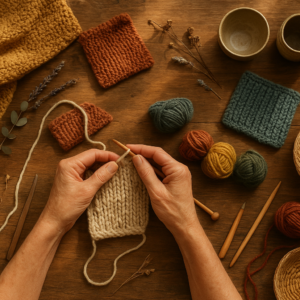
What’s particularly interesting here is that digital fabrication tools often work in partnership with traditional craft skills. A ceramicist might use a 3D-printed mold to produce consistent forms before glazing by hand. A textile artist might use software to plan a weaving pattern before executing it on a loom. The digital and the handmade aren’t opposites — they’re increasingly collaborators, and mixing traditional and modern mediums has become a defining feature of contemporary craft practice.
NFTs and the Changing Economics of Digital Art
Non-fungible tokens had an explosive moment of public attention around 2021, when digital artist Beeple sold a work for $69 million at Christie’s auction house. Since then, the NFT market has cooled considerably, but the underlying questions it raised haven’t gone away.
For digital artists, the ability to attach verifiable ownership and scarcity to digital files was genuinely significant. Digital work had always been infinitely copyable — which made it hard to sell in the way that physical art could be sold. NFTs offered one potential solution, even if the market around them proved volatile and speculative.
Regardless of how NFT technology evolves, the conversation about how digital artists can be fairly compensated for their work is ongoing and important. The economics of digital creativity remain genuinely unsettled.
How Technology Is Changing the Experience of Art
It’s not just art production that technology is reshaping — it’s also how audiences discover, access, and experience art.
Social Media as Gallery Space
Instagram, Pinterest, TikTok, and other platforms have become primary venues for discovering visual art and craft. Artists who might never have secured gallery representation can build audiences of hundreds of thousands by sharing their process and work online. The studio visit, once the privilege of collectors and curators, has become a public spectacle — and many artists have embraced this transparency.
This shift has changed the economics of being an artist in meaningful ways. It’s created opportunities for artists to sell directly to collectors and fans, to teach through online courses, and to build communities around their practice. It’s also created new pressures — to produce content constantly, to perform authenticity, and to navigate the often opaque dynamics of algorithmic visibility.
Interactive and Participatory Experiences
Technology has enabled art experiences that ask something of the audience beyond passive observation. Interactive installations respond to movement, sound, or touch. Digital works evolve over time or change based on viewer input. Online platforms allow people anywhere in the world to participate in collaborative creative projects.
This participatory dimension has deep roots in conceptual and performance art traditions, but technology has dramatically expanded its scale and accessibility. Art that responds to its audience, that changes and breathes, offers a fundamentally different relationship between viewer and work.
What This Means for Artists and Makers
For practicing artists and crafters, all of this raises practical questions. Which technologies are worth learning? How do you integrate digital tools without losing what makes your work distinctively yours? How do you stay current without chasing every shiny new thing?
There’s no universal answer, and that’s probably the honest response worth sitting with. Some artists have built entire practices around cutting-edge technology. Others use a single digital tool — maybe just a tablet for sketching, or a laser cutter for one stage of their process — and keep everything else resolutely traditional. Both approaches are valid.
What matters most is intentionality. Understanding why you’re incorporating a particular technology — what it allows you to do that you couldn’t do before, or what it helps you do more efficiently or expressively — is more valuable than adopting tools simply because they’re new. The artists and makers who navigate this intersection most successfully tend to be those who know their own creative values clearly enough to evaluate new tools against them.
It’s also worth noting that technology can be a gateway back to traditional skills. Many people who started with digital art have found themselves drawn toward printmaking, painting, or ceramics — wanting the texture and resistance of physical materials after spending time in entirely digital environments. The relationship between digital and traditional isn’t a one-way street.
Conclusion
The intersection of art and technology is one of the most genuinely interesting spaces in contemporary culture. It’s messy, contested, and full of unresolved questions about authorship, value, labor, and access — and that’s part of what makes it so compelling to explore.
Across history, technology has consistently challenged and ultimately expanded what art can be. Photography didn’t kill painting. Digital tools didn’t end traditional craft. And while AI and other emerging technologies are raising questions that deserve serious engagement, the creative impulse has a remarkable track record of absorbing new tools and finding unexpected uses for them.
What’s clear is that artists and makers today have access to an unprecedented range of tools, communities, and platforms. The choices about which to embrace, which to ignore, and how to combine the digital with the handmade are genuinely creative decisions — as expressive, in their own way, as the work those choices help produce.
The conversation between art and technology is ongoing, evolving, and far from settled. That’s not a problem to solve — it’s an invitation to keep exploring.